Tones Chart
The four tones plus neutral tone, shown on every vowel with rising, falling and dipping arcs that make pitch visible.
What children practise in Tones Chart
Every pinyin module adds one more sound to a child's toolkit, so sessions stay short and confidence keeps growing instead of piling up.
Inside Tones Chart, practice is split into short rounds with instant feedback — children always know how they are doing, and parents can watch the streak grow day by day.
Sample content
Tone marks across every vowel — pitch made visible
See Tones Chart in the app
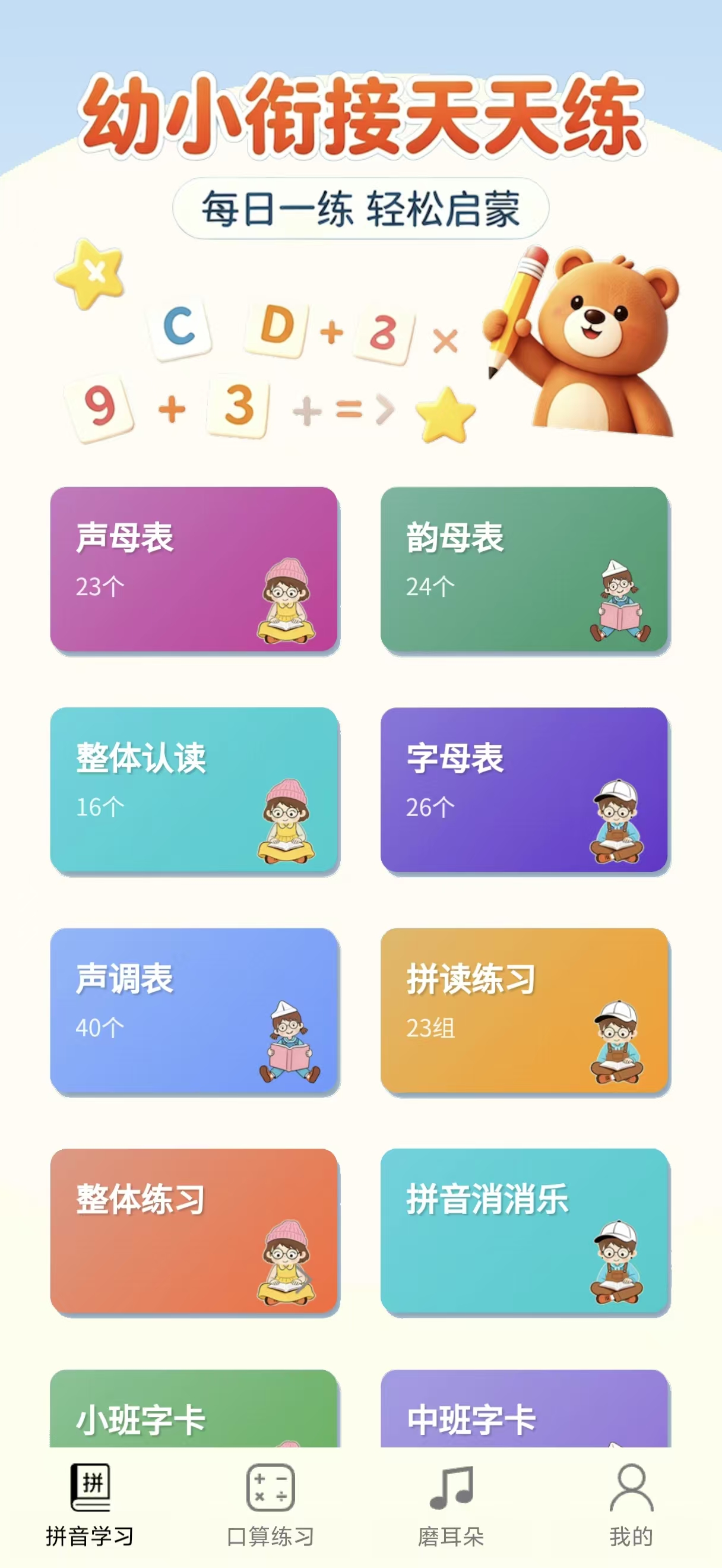
Tones Chart lives inside the Pinyin Learning track — here is how it looks in context.
More from Pinyin Learning
Keep the daily routine rolling with these neighbour modules.
Frequently asked questions
What age is Tones Chart designed for?
Tones Chart works best for children aged 3 to 8 — from playful first exposure in kindergarten to confident fluency before Grade 1 and 2. Younger children start with shorter sessions and plenty of help.
How long should a daily Tones Chart session be?
About 10 minutes. Short, frequent practice builds stronger memory than one long weekly session, and it keeps the experience feeling like play rather than homework.
Does Tones Chart require any parent preparation?
No. Each session is self-explanatory: children see the content, hear the model and practise with instant feedback. Parents can simply sit alongside for encouragement — or enjoy the coffee while it lasts.